Grand Island Commercial Roof Repair FAQ
What Does Your Leak, Drain, Or Metal Roof Problem Need?
Our Grand Island commercial roof repair FAQ answers what building owners ask about leaks, drains, metal roofs, plants, permits, and nearby towns.
Grand Island Commercial Roof Repair FAQ Topics
Each answer in our Grand Island commercial roof repair FAQ gives the short version first, then the detail. Jump to a topic below.
Repair Basics And Permits
Repair or replace: what tells a Grand Island owner a commercial roof is still repairable?
A Grand Island commercial roof is usually still repairable when leaks trace to specific spots such as flashings, seams, or drains. Most of the insulation should also be dry. A moisture scan or core cuts confirm how much is wet. A log of each leak, its location, and the fix shows whether problems are isolated or spreading across the roof.
What counts as emergency commercial roof repair in Grand Island?
Emergency commercial roof repair in Grand Island covers active leaks over equipment, inventory, or occupied space, plus storm damage that leaves the roof open. Temporary work includes tarping, sealing open seams, and clearing blocked drains. Permanent repairs follow once the roof is dry and safe to work on. Moving inventory and shutting off power near the leak limits interior damage.
How do you find a leak on a flat roof in Grand Island?
Finding a leak on a Grand Island flat roof starts inside, by marking where water appears, then checking the roof above and upslope. Water often travels along the deck before dripping. Common sources are open seams, cracked flashing at curbs, and split pitch pans. Infrared scans after sunny days and controlled water tests narrow down hard-to-find leaks.
What does a Grand Island commercial roof inspection cover?
A Grand Island commercial roof inspection covers the membrane or panels, seams, flashings, drains, gutters, rooftop units, and edge metal. The inspector checks for ponding, blisters, punctures, loose fasteners, and hail marks. Inside, ceiling stains and deck rust show past leaks. Findings are photographed and marked on a roof sketch so repairs can be ranked by urgency.
Does commercial roof repair in Grand Island need a building permit?
Commercial roof repair in Grand Island can need a building permit. City Code Section 8-22 requires a separate building permit before a building is altered or repaired, with limited exemptions.
The city has adopted the 2021 International Building Code and 2021 International Existing Building Code. Whether a small patch needs a permit depends on scope, so confirm with the Grand Island Building Department.
Flat Roof Questions
Why does a Grand Island flat roof leak in heavy rain?
A Grand Island flat roof often leaks in heavy rain because water rises above seam laps or flashing heights when drains cannot keep up. Clogged strainers, sagging deck areas, and undersized scuppers cause backups. The NWS Hastings office lists Grand Island's wettest day on record at 6.50 inches, on May 11, 2005. Clear drains and sealed flashings reduce heavy-rain leaks.
How are flat roof drains repaired on Grand Island commercial buildings?
Flat roof drain repair on a Grand Island commercial building usually means resetting the clamping ring or replacing the drain flashing. A cracked drain body gets replaced. Leaks around drains are common because water collects there. Missing strainers let debris clog the line. Crews also check that the drain sits at the low point so water does not pond nearby.
What drives flat roof repair cost in Grand Island?
Flat roof repair cost in Grand Island depends on membrane type, the size of the damaged area, and how much wet insulation sits below. A seam patch takes far less material and labor than cutting out soaked insulation. Access, building height, and work around rooftop units affect time. Repairs on older, brittle membranes take more care and material.
How is ponding water fixed on a Grand Island flat roof?
Ponding water on a Grand Island flat roof is fixed by restoring drainage to the low spots. Options include clearing or lowering drains, adding crickets around curbs, installing tapered insulation, or adding scuppers. Water that stands more than two days after rain speeds membrane wear and adds weight. A sagging deck may need repair where the structure has deflected.
Can an old built-up flat roof in Grand Island be patched?
An old built-up or modified bitumen flat roof in Grand Island can usually be patched where the damage is local. Crews cut out blistered or cracked areas, dry the substrate, and install matching plies or a compatible patch. Gravel is moved aside and replaced after the repair. Widespread cracking or wet insulation across the roof points to larger repairs.
Metal Roof Questions
How does freeze and thaw damage metal roofs on Grand Island buildings?
Freeze and thaw damage metal roofs on Grand Island buildings by working water into laps and fastener holes, then expanding as the water freezes. Ice dams at cold eaves push meltwater uphill under panel laps.
NWS Hastings records a 135-day run of lows at or below freezing in Grand Island, from November 1964 to March 1965. Sealed laps and clear gutters limit winter leaks.
How are metal roof seams repaired on Grand Island commercial buildings?
Metal roof seam repair on a Grand Island commercial building starts with cleaning the lap, removing old sealant, and checking for loose fasteners. Crews install new butyl tape or sealant, refasten the lap, and cover the seam with reinforcing fabric and compatible sealant. Standing seams with open clips get re-seamed or re-clipped. Rusted lap edges are treated before sealing.
What drives commercial metal roof repair cost in Grand Island?
Commercial metal roof repair cost in Grand Island depends on how many fasteners, seams, and panels need work, plus roof height and access.
Replacing a few rusted panels costs far less than resealing every lap on a large building. Rust depth, panel gauge, and matching older profiles affect material choices. Lifts or roof anchors for steep or tall roofs add labor.
What is the most common cause of metal roof leaks in Grand Island?
The most common cause of metal roof leaks in Grand Island is failed fasteners. Rubber washers dry out and crack, and thermal movement loosens screws until water runs down the shank. Open laps, failed sealant at ridge caps, and torn flashing at curbs are the next most frequent sources. Fastener checks every few years catch most of these early.
How do you fix leaking screw holes in a Grand Island metal roof?
Leaking screw holes in a Grand Island metal roof are fixed by removing the old fastener. A larger-diameter screw with a new sealing washer goes in its place. Stripped or enlarged holes may need a sealed patch plate. Every fastener nearby is checked for over- or under-driven washers. Abandoned holes get sealant and a small metal patch.
Roof Leak Questions
What should a Grand Island business do when the roof leaks after hail?
A Grand Island business with a roof leaking after hail should protect the interior first, then document the damage. Move inventory, cover equipment, and photograph ceiling stains and roof damage with dates. A roof inspection identifies punctures, cracked flashing, and bruised membrane. Temporary seals stop water while the insurer reviews the claim and permanent repairs are planned.
What drives roof leak repair cost for Grand Island commercial buildings?
Roof leak repair cost for a Grand Island commercial building depends on how long the leak takes to find and what failed. Wet material adds to the scope.
A cracked pipe boot is a small repair. A leak that soaked insulation across a bay needs cut-out and replacement. Ceiling tile, drywall, and other interior work are separate from the roof repair itself.
How do you find a roof leak in a Grand Island warehouse?
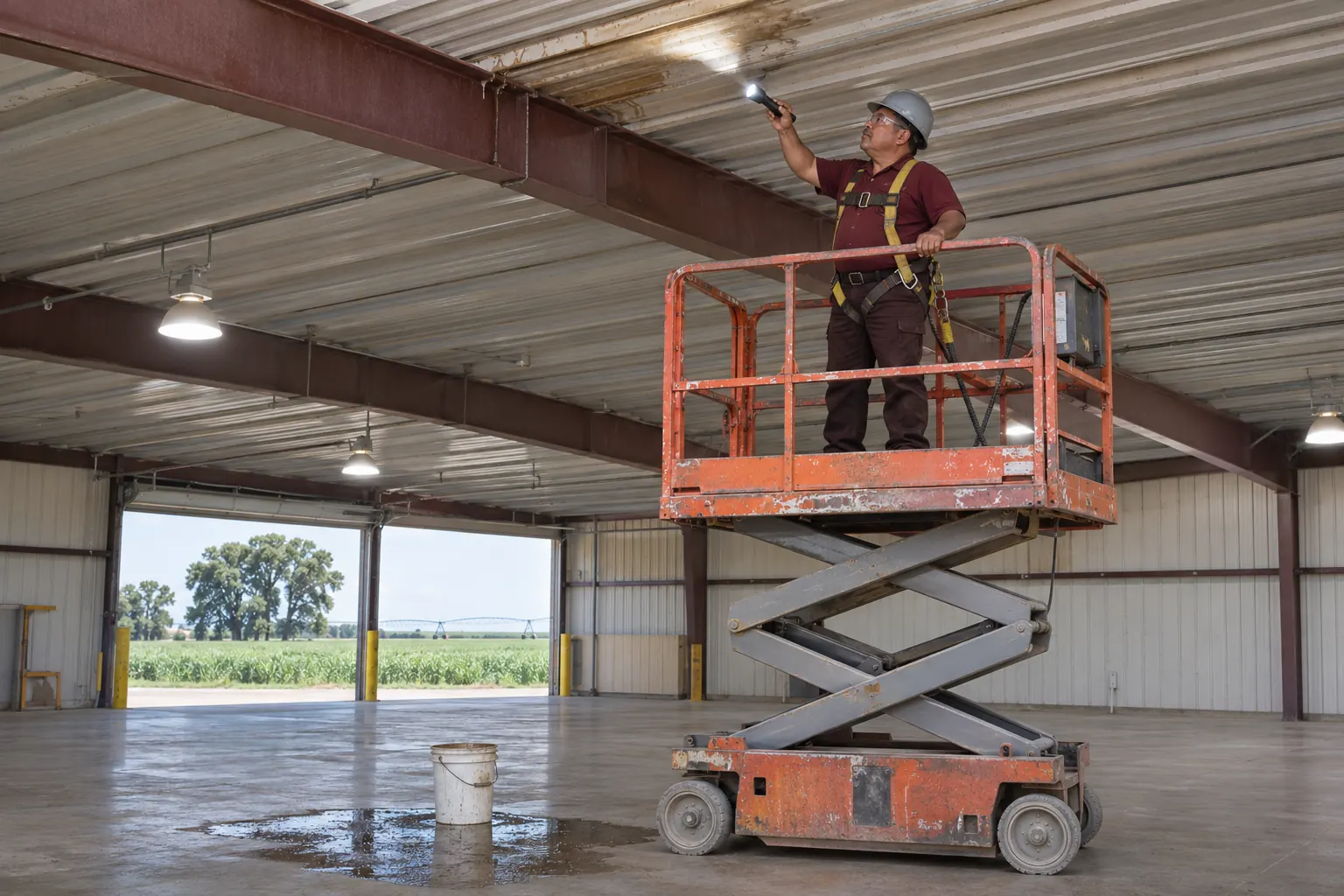
Finding a roof leak in a Grand Island warehouse starts by mapping drips on the floor and marking them on a roof sketch. High ceilings let water travel along purlins or deck flutes before falling, so the source may be several feet away. Crews then check seams, fasteners, skylights, and curbs above. Water testing in sections confirms the source.
Who should fix a leaking commercial roof in Grand Island?
A leaking commercial roof in Grand Island should be fixed by a commercial roofer who works with that roof's membrane or panel system. Repairs on TPO, EPDM, and metal each need specific materials and methods. Mismatched sealants and patches can trap water or fail to bond. A quick handyman patch may stop a drip while the source keeps leaking.
Why does a Grand Island roof leak only in wind-driven rain?
A Grand Island roof that leaks only in wind-driven rain usually has a gap at an edge, wall flashing, or rooftop unit. Wind pushes water sideways under counterflashing, up laps, and through loose edge metal. Noting which way storms came from helps locate the source. Repairs include resealing counterflashing, refastening edge metal, and sealing unit curbs.
Why do Grand Island roofs leak around rooftop HVAC units?
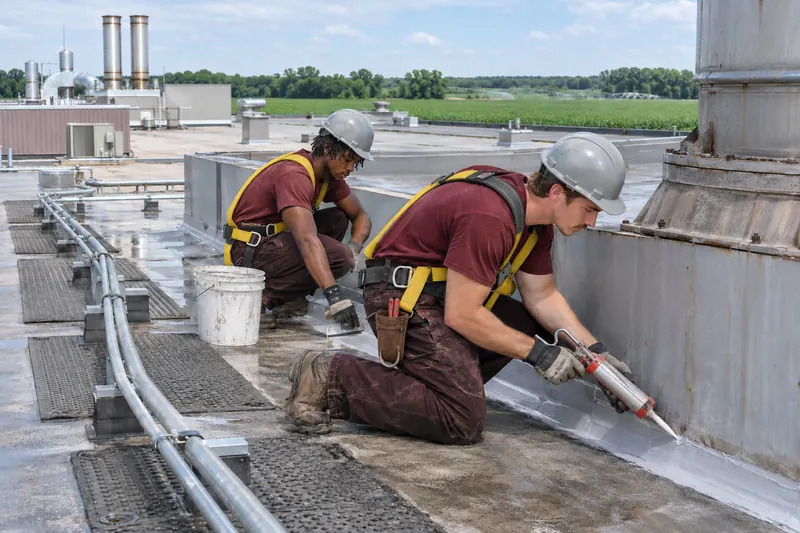
Roofs leak around rooftop HVAC units in Grand Island because curb flashing cracks, condensate lines back up, or service crews damage the membrane. Unsealed unit panels can also let rain into ductwork, which looks like a roof leak. Repairs include reflashing curbs, clearing condensate drains, and adding walkway pads at service doors.
Industrial Roof Questions
What does an industrial roof inspection in Grand Island include?
An industrial roof inspection in Grand Island includes the usual membrane, seam, and drain checks, plus the areas plants stress most. Inspectors look at exhaust discharge zones, grease or chemical residue, walkway wear, equipment supports, and damage from service crews. Safety items such as edge protection and hatch condition are noted. Findings go into a prioritized repair list.
How are industrial roof leaks repaired at Grand Island plants without shutting down?
Industrial roof leaks at Grand Island plants are repaired from the roof side while production continues below. Crews coordinate with plant maintenance on lockout of rooftop units, hot work permits, and areas to keep clear. Interior drop zones get protection. Temporary seals go on during shifts if permanent repairs need dry weather or parts.
How is roof damage around exhaust fans repaired on Grand Island industrial buildings?
Roof damage around exhaust fans on Grand Island industrial buildings is repaired by cleaning residue, removing degraded membrane, and replacing curb flashing. Grease and chemical exhaust soften many membranes, so repair materials must resist that exposure. Grease containment boxes or guards limit future buildup. Fan curbs are also checked for rust, loose fasteners, and height above the roof surface.
How often should Grand Island industrial roofs get repair checks?
Grand Island industrial roofs should get repair checks at least twice a year, in spring and fall, and after major storms. Plants with heavy rooftop traffic or process exhaust may need quarterly walks. Each visit clears drains, checks seams and flashings, and logs damage from service crews. Small repairs made on schedule keep leaks from reaching production areas.
How are skylight leaks repaired on Grand Island industrial buildings?
Skylight leaks on Grand Island industrial buildings are repaired at the curb flashing, the frame seal, or a cracked lens. Crews reseal or replace curb flashing, refasten loose frames, and replace yellowed or cracked lenses. Fall protection screens are added where workers walk near skylights. Older plastic domes crack easily in hail, so they are checked after storms.
Nearby Town Questions
What roof repairs do Aurora, NE businesses need most after winter?
Aurora businesses often need roof repairs after winter at seams, flashings, and gutters. Ice and meltwater open laps and pull sealant away from curbs. Snow removal with shovels can puncture membranes. A spring walk-through in Aurora catches these problems before summer storms. Aurora is within our Grand Island service area for commercial roof repair.
Can Central City, NE businesses repair part of a commercial roof without replacing it all?
Central City businesses can often repair part of a commercial roof without replacing the whole system. Section repairs replace damaged membrane, insulation, or metal panels where the rest of the roof is sound. The new section must tie into the existing system with compatible materials. Central City is part of our service area around Grand Island.
What affects commercial roof repair cost for St. Paul, NE buildings?
Commercial roof repair cost for St. Paul buildings depends on the type of damage, the roof system, and how much wet material needs replacing. Travel time and material delivery are part of every out-of-town repair. Grouping several repairs into one visit spreads those costs. St. Paul is within our Grand Island service area.
How do Ord, NE businesses keep metal shop roofs from leaking?
Ord businesses keep metal shop roofs from leaking by checking fasteners, laps, and ridge caps on a regular schedule. Wind and temperature swings loosen screws over time. Replacing worn fasteners and resealing laps early prevents rust around holes. Clear gutters stop ice backups in winter. Ord is part of our service area around Grand Island.
What roof damage shows up on Wood River, NE commercial buildings after storms?
Wood River commercial buildings often show torn edge metal, lifted membrane at corners, debris punctures, and dented panels after storms. Hail bruises membrane and cracks sealant, sometimes without an immediate leak. A post-storm inspection documents damage while the marks are fresh. Wood River is within our Grand Island service area.
Question Not Listed Here?
Request an estimate or call, and ask it on the roof walk. We answer it with your roof in front of us.
Get A Free EstimateSources For Local Facts
Your Question Missing From Our Grand Island Commercial Roof Repair FAQ?
Call us or request an estimate, and we will answer it for your roof.