Curb And Unit Reflashing
New curb flashing, cleared condensate lines, and walkway pads at service doors stop leaks around rooftop units.

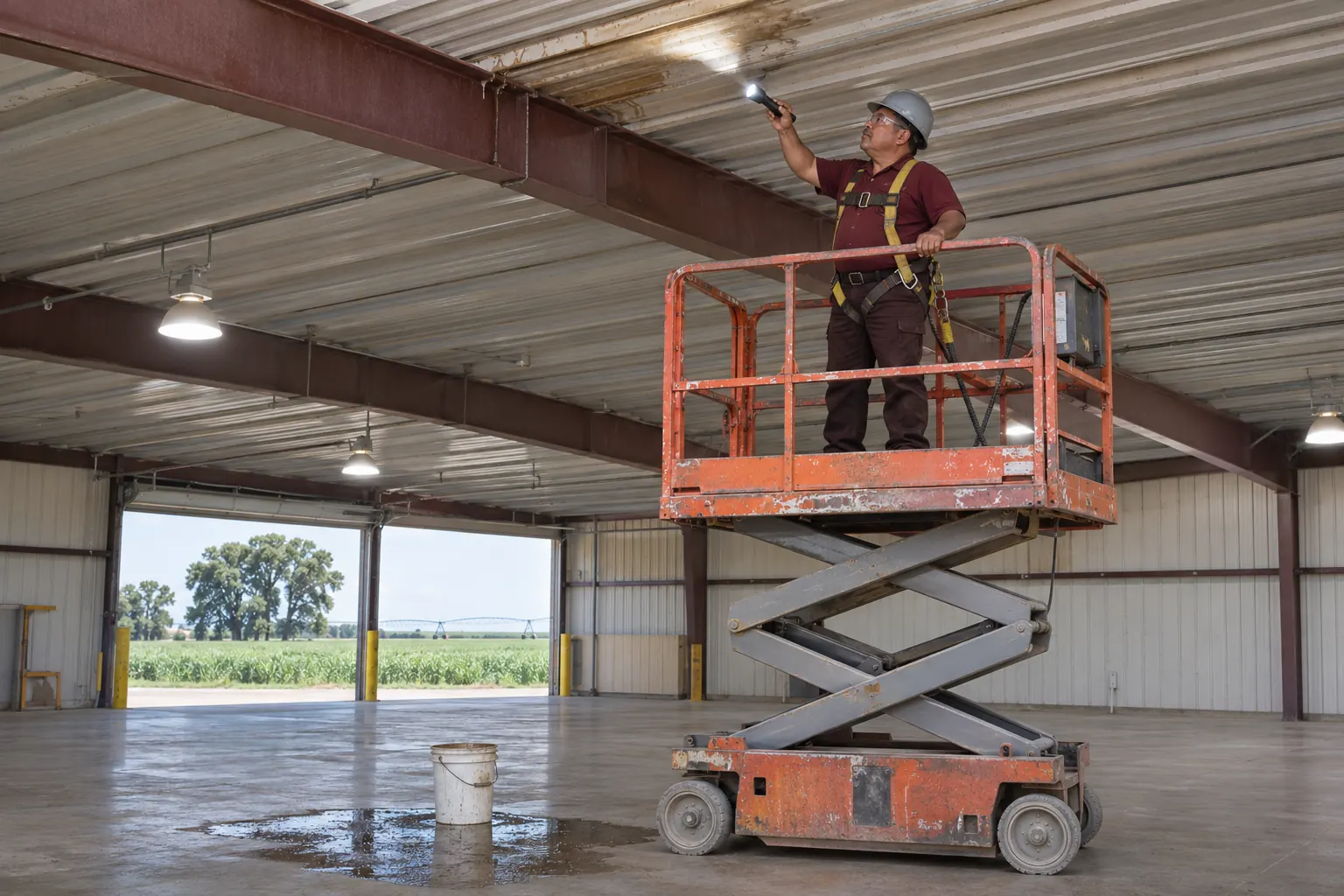
As a Grand Island commercial roof leak repair contractor, we trace water from the ceiling stain back to the opening, then repair that detail on the roof.
Grand Island commercial roof leak repair starts with one question: is this one opening, or a roof failing in many places? These signs help sort it out.
| Roof Detail | Repair Fits | Plan Bigger Work |
|---|---|---|
| Where it shows | One stain or drip area | Stains in several bays |
| When it leaks | Only in wind-driven or heavy rain | In almost every rain |
| Source found | Curb, boot, seam, or skylight | Wet insulation across the field |
| History | First leak at this spot | Same spots patched many times |
Leaks show up inside long before the roof looks bad from the parking lot. Report any of these when you call.
Hail cracks sealant, splits pipe boots, and bruises membrane. Drips that start after a storm get documented with dated photos for the insurer.
Water rising over flashing in a downpour means a drain is backing up or a flashing sits too low, and both get repaired.
Sideways rain finds gaps under counterflashing, loose edge metal, and unit panels. The storm direction points to the wall or edge involved.
Cracked curb flashing, a backed-up condensate line, or a loose unit panel each drip near the unit and look the same from inside.
Skylight leaks come from curb flashing, the frame seal, or a cracked lens, and each one takes a different fix.
The repair follows the source. These are the four we make most.
New curb flashing, cleared condensate lines, and walkway pads at service doors stop leaks around rooftop units.
Resealed counterflashing and refastened edge metal close the gaps that wind-driven rain pushes through.
Curb flashing is resealed or replaced, loose frames refastened, and cracked lenses swapped for new ones.
Split pipe boots, punctures, and open seams get a patch or boot matched to the membrane on the roof.
A single leak almost always gets a targeted repair. These details show when leaks point to more.
| Factor | Targeted Leak Repair | Plan Larger Work |
|---|---|---|
| What sets the cost | Tracing time and the failed part | Wet insulation and membrane area |
| Wet material | Ceiling tile and a few boards | Insulation soaked across a bay |
| Interior work | Tile and drywall handled separately | Interior repairs repeated after each storm |
| Leak pattern | Same spot, clear source | New spots each season |
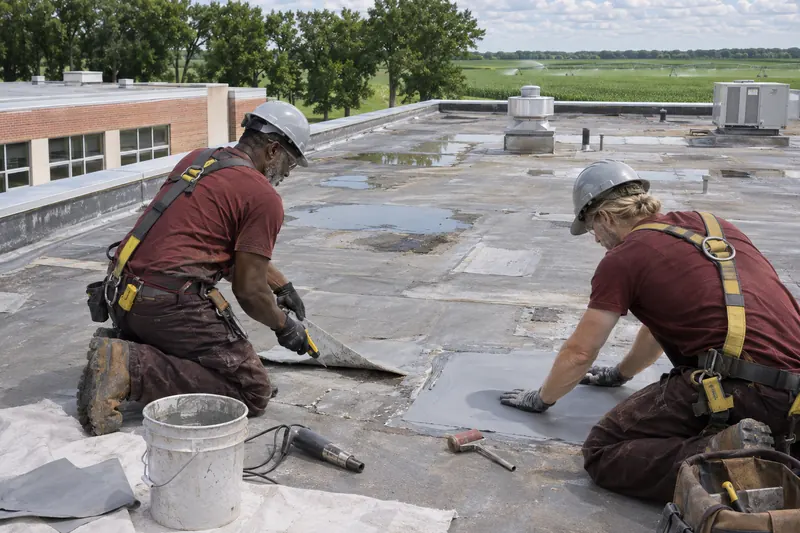
Move what you can, then request an estimate with the leak location and when it started. Active leaks get a temporary seal first.
Get A Free EstimateTracing comes first, because most leaks show up feet away from where water enters.
Drip spots and stains get marked on a roof sketch, since in tall warehouses water often runs along purlins or deck flutes before it falls.
Seams, fasteners, curbs, skylights, and edge metal above each mark are checked, working uphill from the drip line.
Where the source still hides, a controlled water test runs one section at a time until the drip returns inside.
The opening is repaired with materials matched to the roof system, and any wet insulation found is cut out and replaced.
You get photos and a log entry naming the source, the repair, and the date, so future leaks are easier to read.
Once the source is found, the fix often falls under one of these services.
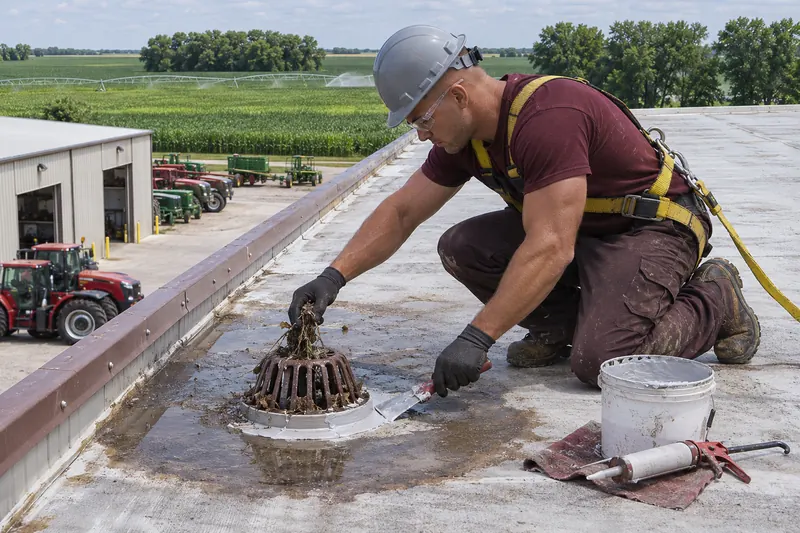
Leaks traced to membrane seams, drains, or ponding areas get a flat roof repair at that spot.
Flat roof repair in Grand Island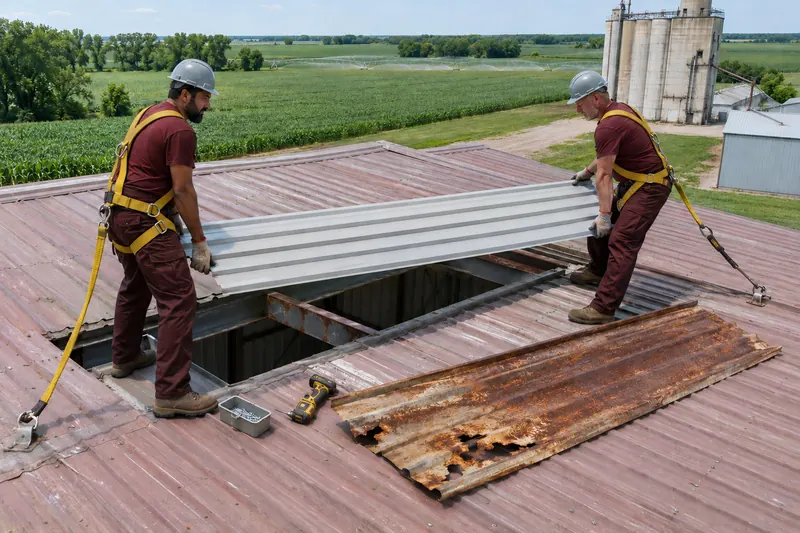
Rows of drips under a steel roof usually lead to fasteners or laps, which get a metal roof repair.
Metal roof repair in Grand Island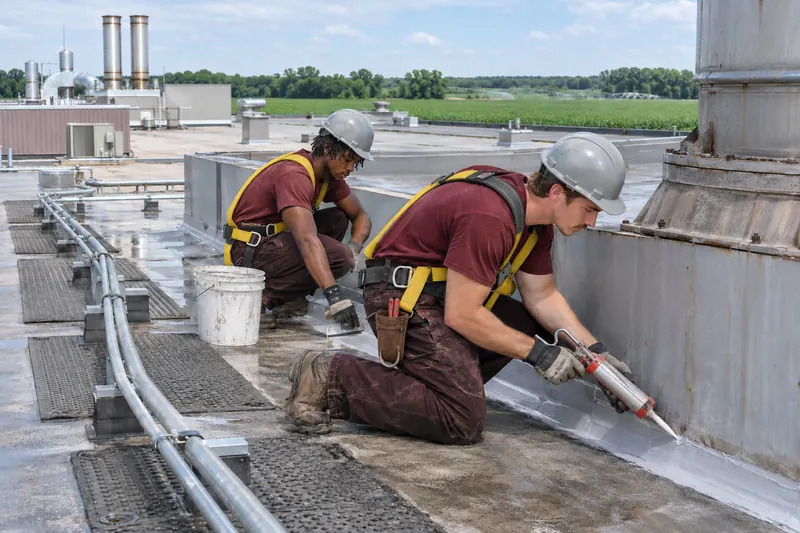
Plant leaks near exhaust fans or duct curbs are repaired around production with plant maintenance.
Industrial roof repair in Grand IslandStraight answers on leaks, from hail damage to rooftop units.
Protect the inside first: move stock, cover equipment, and photograph ceiling stains with dates. Then have the roof inspected for punctures, cracked flashing, and bruised membrane. A temporary seal stops the water while your insurer reviews the claim, and the permanent repair is planned once the damage is documented.
Two things: how long the leak takes to find and what failed. A cracked pipe boot is a small repair. A leak that soaked insulation across a bay needs that section cut out and replaced. Wet material adds to the scope, and ceiling tile, drywall, and other interior work are separate from the roof repair.
Start by mapping drips on the floor and marking them on a roof sketch. High ceilings let water travel along purlins or deck flutes before it falls, so the opening can be several feet away. We then check seams, fasteners, skylights, and curbs above, and water-test section by section to confirm the source.
A commercial roofer who works with your roof system. TPO, EPDM, and metal each take their own materials and methods, and a mismatched sealant or patch can trap water or fail to bond. A quick handyman patch might stop one drip while the real opening keeps leaking into the insulation.
Wind pushes water sideways under counterflashing, up laps, and through loose edge metal, so the gap is usually at an edge, a wall flashing, or a rooftop unit. Noting which way the storm came from helps find it. Repairs include resealing counterflashing, refastening edge metal, and sealing unit curbs.
Curb flashing cracks, condensate lines back up, and service visits can puncture the membrane next to the unit. An unsealed unit panel can also let rain into the ductwork, which looks like a roof leak from below. We reflash curbs, clear condensate drains, and add walkway pads at service doors.
Tell us where the water shows and when it started, and we will trace it and fix the opening.