Flat Roof Drain Repair
Resetting the clamping ring, replacing drain flashing, or swapping a cracked drain body, plus a new strainer so debris stays out of the line.

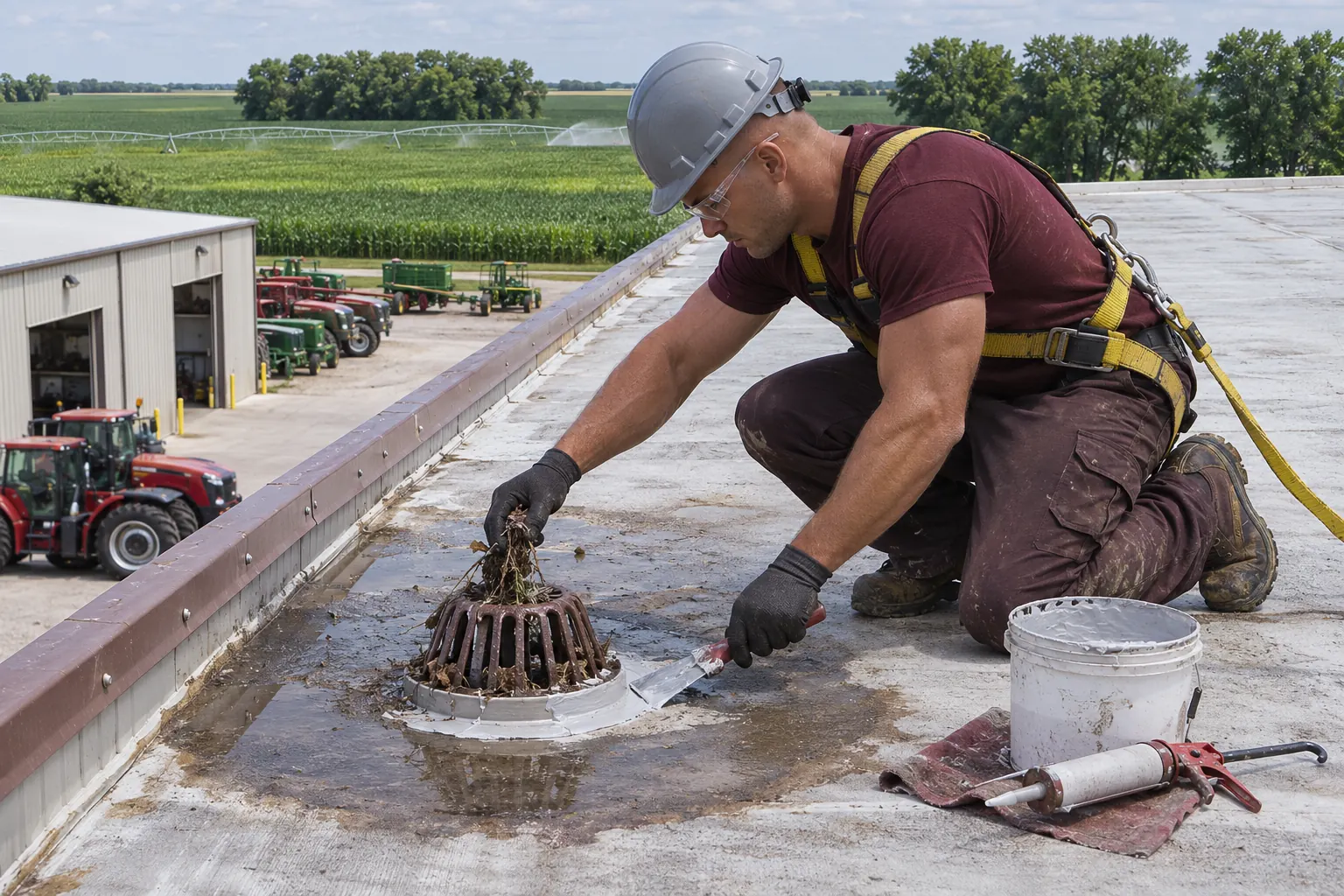
As a Grand Island flat roof repair contractor, we fix TPO, EPDM, built-up, and modified bitumen roofs at the seam, drain, or flashing that lets water in.
Grand Island flat roof repair works best when the damage is local and the membrane around it still bonds. Use these roof details to see where yours stands.
| Roof Detail | Repair Fits | Plan Bigger Work |
|---|---|---|
| Membrane surface | Flexible, with punctures or open seams in a few spots | Brittle, cracking when folded, or shrinking at the edges |
| Insulation | Wet only around one drain or curb | Wet across several bays on the moisture scan |
| Drainage | One clogged or loose drain causing ponding | Deck sag across a wide area holding water |
| Past repairs | Earlier patches still bonded and dry | Layers of patches failing at the same seams |
Low-slope roofs show trouble before water reaches the ceiling. These five conditions are the ones to mention when you call.
Ponding past 48 hours ages the membrane faster and adds weight over the deck. We check drain height and deck sag before choosing a fix.
Heavy storms raise water above seam laps and flashing heights when a strainer clogs. NWS Hastings lists Grand Island's wettest day at 6.50 inches.
Open laps on EPDM and unwelded spots on TPO let water travel under the sheet. A probe along the seam shows how far the opening runs.
Raised blisters trap moisture between plies and crack under foot traffic. Small ones get cut, dried, and patched with matching plies.
A loose clamping ring lets water slip under the drain flashing right where the most water collects on the roof.
Each repair below is matched to the membrane on your roof, so the patch bonds and moves with the sheet around it.
Resetting the clamping ring, replacing drain flashing, or swapping a cracked drain body, plus a new strainer so debris stays out of the line.
TPO seams are cleaned and heat-welded; EPDM laps get primer, new seam tape, and a cover strip where the old adhesive let go.
Crickets around curbs, tapered insulation at low spots, or a lowered drain move standing water off the membrane.
Soaked boards found by moisture scan or core cut are removed, the deck is checked, and new insulation and membrane go back in.
A repair buys real service life when the problem is local. Replacement planning starts when the roof fails in many places at once.
| Factor | Flat Roof Repair | Plan Replacement |
|---|---|---|
| Leak count | One to three known leak spots | New leaks in new places every heavy rain |
| Membrane age | Sheet still flexible and bonded | Sheet chalking, cracking, or shrinking |
| Wet area | Small areas around drains or curbs | Large sections of wet insulation |
| What sets the cost | Membrane type, damaged area, and access | Full tear-off, new insulation, and disposal |
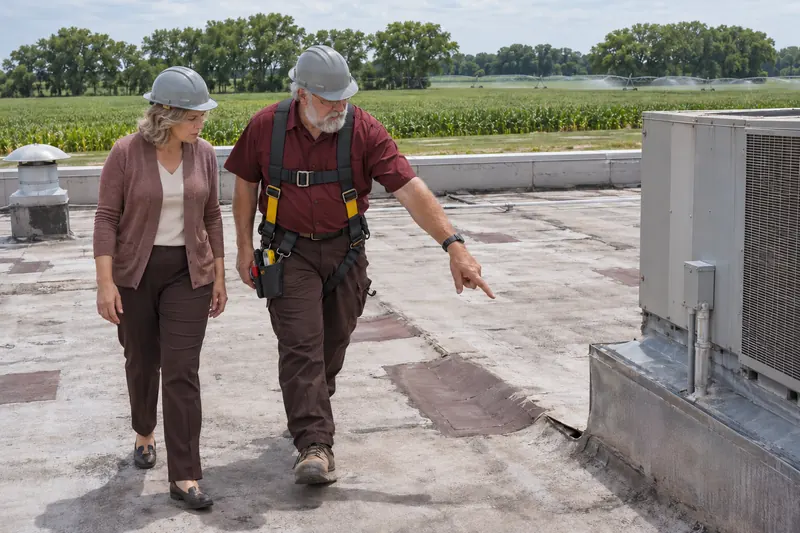
Send a photo of the low spot and the nearest drain when you request an estimate. Drain height and deck sag decide which fix fits.
Get A Free EstimateFive steps take a low-slope roof from leak report to finished repair.
Every seam, drain, curb, and edge gets checked, and each problem is pinned on a roof sketch with photos so nothing gets lost between visits.
Moisture readings and a core cut near the leak show how far water spread under the membrane before any cutting starts.
Findings come back ranked: active leaks, failing details, and items to watch, each with the method and materials for your membrane type.
Crews clean and prime the sheet, then weld, tape, or ply the repair. Drains and curbs are reflashed with matching material.
Strainers go back in, drains are run with water, and before and after photos are sent for your building file.
Flat roofs often sit beside metal additions or plant equipment that need their own repair work.
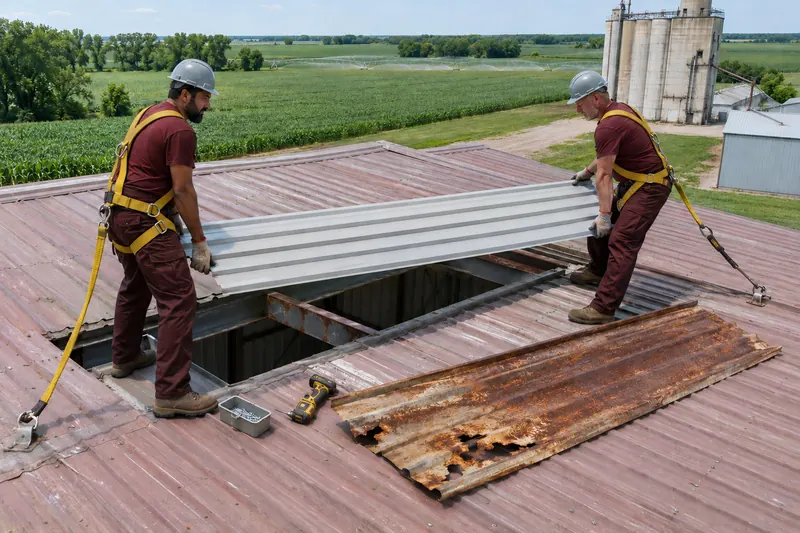
Metal shop additions and canopies next to a flat roof leak at fasteners and laps, which take a different repair method.
Metal roof repair in Grand Island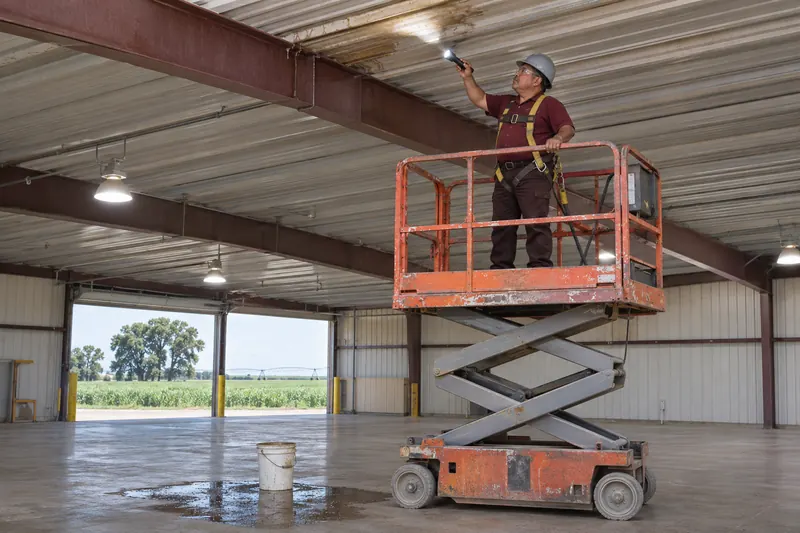
When the source is unclear, leak tracing starts at the ceiling stain and works back to the opening above.
Roof leak repair in Grand Island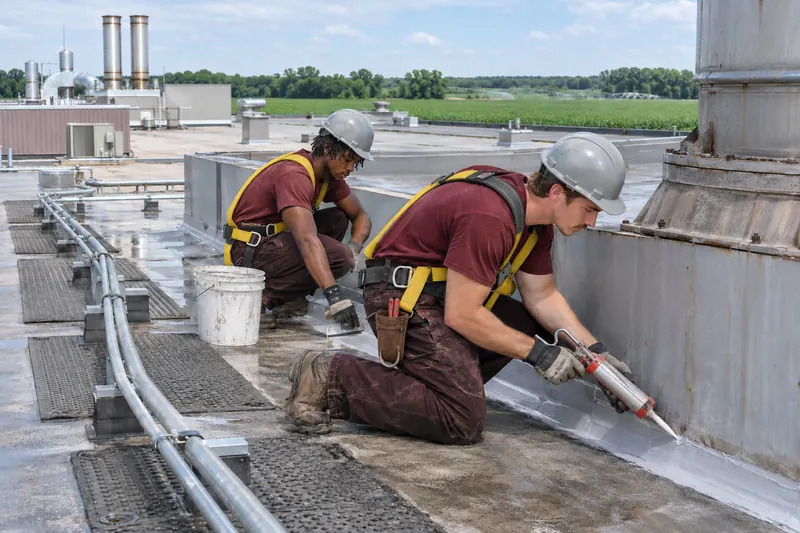
Plant roofs with exhaust fans and duct curbs need repairs that resist grease and process residue.
Industrial roof repair in Grand IslandAnswers to the flat roof questions we hear most around Grand Island.
Light rain drains away before it reaches the top of a seam lap or flashing. In a heavy storm, a clogged strainer or undersized scupper backs water up until it rises over those edges. NWS Hastings lists Grand Island's wettest day at 6.50 inches on May 11, 2005, so drains have to keep up with big storms.
Most drain repairs reset the clamping ring and replace the flashing around the drain bowl, and a cracked drain body gets replaced outright. Water gathers at drains, so a small gap there leaks more than elsewhere. We also replace missing strainers and check that the drain sits at the true low point.
Cost comes down to the membrane type, the size of the damaged area, and how much wet insulation sits under it. A seam patch needs far less labor and material than cutting out soaked boards. Building height, ladder or lift access, and work around rooftop units add time, and older, brittle membranes take more care to tie into.
The fix restores drainage at the low spot: clearing or lowering a drain, adding a cricket behind a curb, installing tapered insulation, or cutting in a scupper. Water that stands more than two days after rain wears the membrane faster and adds load to the deck. Where the deck itself has sagged, that section gets repaired first.
Yes, where the damage is local. Blistered or cracked areas are cut out, the substrate is dried, and matching plies or a compatible patch go back in. Gravel is pulled aside and replaced after the repair. Cracking across the whole roof or wet insulation in many areas points to a larger repair instead of patching.
Tell us where water stands or drips and what membrane you have, and we will schedule the roof walk.