Roof Repair Around Exhaust Fans
Residue is cleaned, degraded membrane cut out, curb flashing replaced with resistant material, and grease containment added.
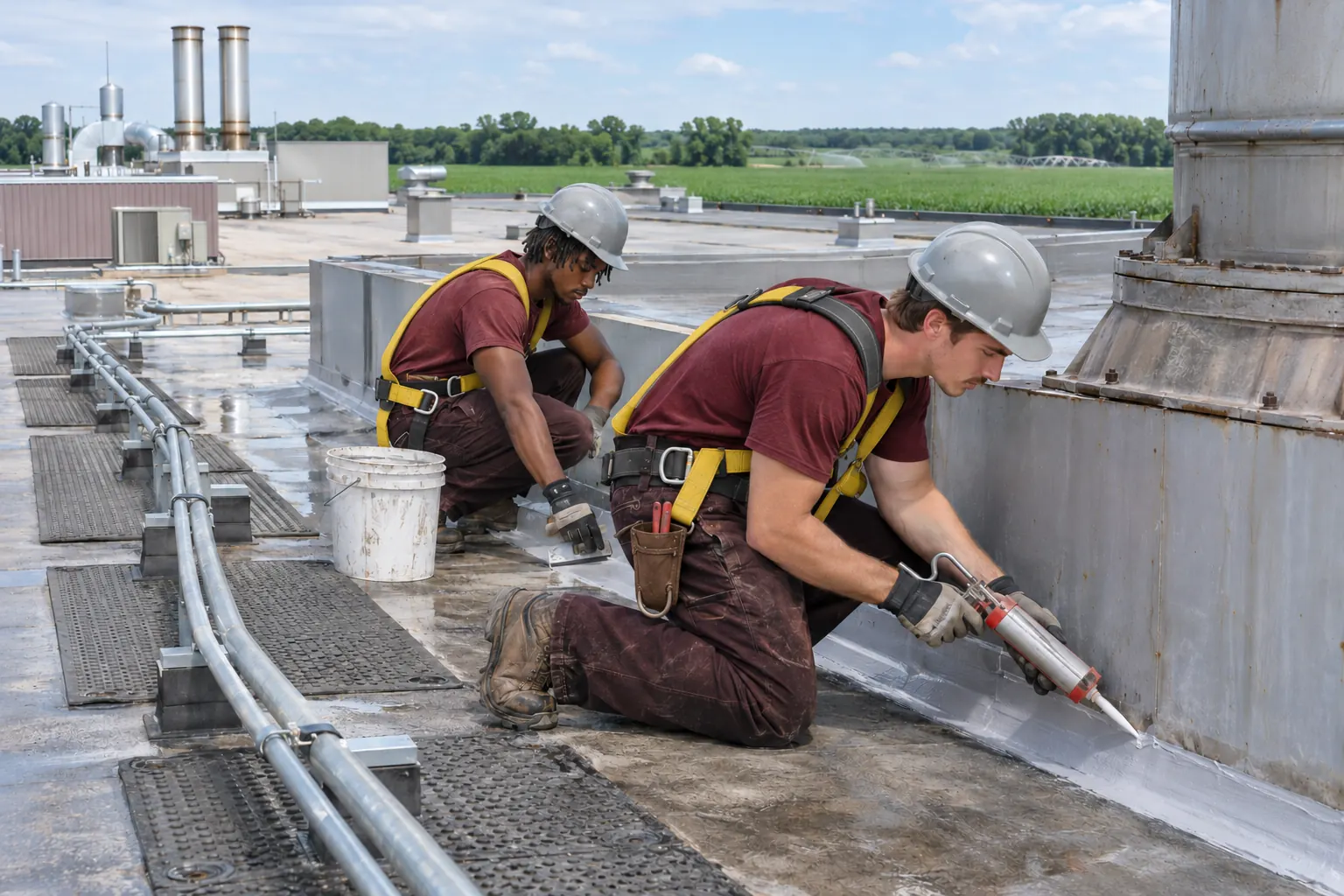
As a Grand Island industrial roof repair contractor, we repair plant and warehouse roofs around fans, ducts, and equipment while production keeps running below.
Grand Island industrial roof repair handles the wear plants put on a roof. These details show what a repair covers and when a section needs more.
| Roof Detail | Repair Fits | Plan Bigger Work |
|---|---|---|
| Exhaust zones | Softened membrane around one or two fans | Residue damage spread across the field |
| Walkway paths | Worn spots along service routes | Membrane worn through on many routes |
| Equipment supports | Loose or cracked flashing at supports | Rusted supports needing rebuilt framing |
| Skylights | Curb leaks or a few cracked lenses | Many brittle domes failing at once |
Plant roofs take more traffic and exhaust than most roofs ever see. Watch for these conditions.
Grease and chemical exhaust soften many membranes until the sheet tears at the fan curb.
Service visits wear through the membrane along the same routes to units and hatches.
Water near production lines or electrical gear needs a temporary seal on the next shift and a permanent repair once the roof dries.
Older plastic domes crack in hail and leak at the curb, and open lenses also need fall protection screens.
Corroded curbs loosen fasteners and pull flashing away from the roof surface.
Each repair here is planned with plant maintenance before anyone goes up on the roof.
Residue is cleaned, degraded membrane cut out, curb flashing replaced with resistant material, and grease containment added.
Pads along service routes protect the membrane from boots and tool carts going to units and hatches.
Curbs are reflashed, cracked lenses replaced, and fall protection screens set over skylights near work areas.
Pipe and duct supports get new flashing, fasteners, and rust treatment where they meet the roof.
Plants rarely replace a whole roof at once. These rows show when a section needs replacing instead of another repair.
| Factor | Industrial Roof Repair | Replace A Section |
|---|---|---|
| Exhaust damage | Local to a fan or two | Membrane softened over a wide area |
| Moisture | Dry insulation outside leak spots | Wet insulation across a production bay |
| Shutdown needs | Work done from the roof side during shifts | Bay work timed with a planned shutdown |
| Repair history | Repairs holding between checks | Same areas failing every season |
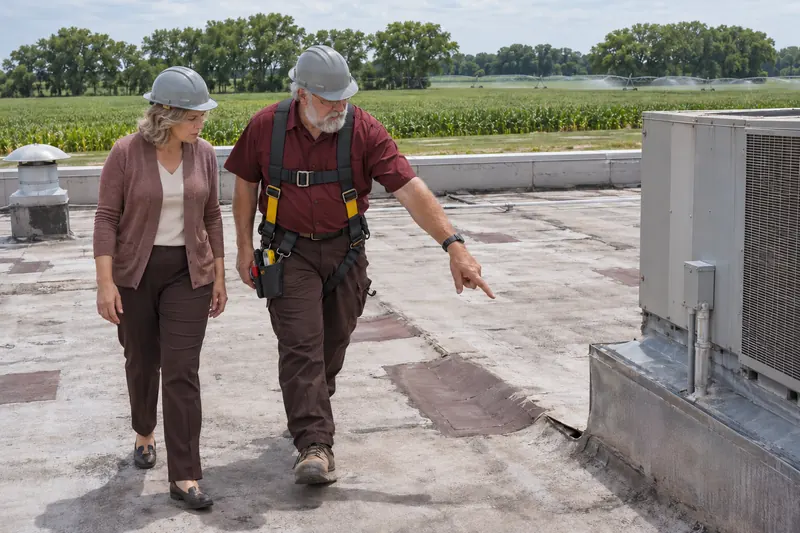
Request an estimate and list the exhaust type and fan count. Membrane choice for the repair depends on what the fans discharge.
Get A Free EstimatePlant work adds safety steps, so the order of work matters on every industrial roof we repair.
Membrane, seams, and drains get the standard check, plus exhaust zones, residue, walkway wear, equipment supports, edge protection, and hatches.
Lockout of rooftop units, hot work permits, and clear zones are set with your maintenance lead before any crew goes up.
Areas under the repair get covered or cleared so debris and water stay off production lines and stock.
Crews work from the roof side while production runs, and temporary seals go on where a permanent fix needs dry weather or parts.
Spring and fall walks, plus checks after major storms, clear drains and log new damage left by service visits.
Most plant sites mix roof types. These services cover the buildings around the plant floor.
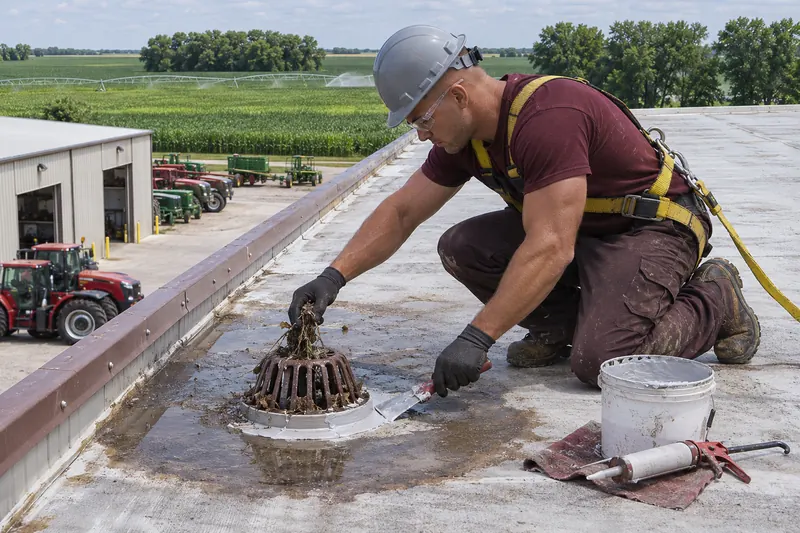
Office and warehouse sections beside the plant floor often have membrane roofs that need seam and drain repairs.
Flat roof repair in Grand Island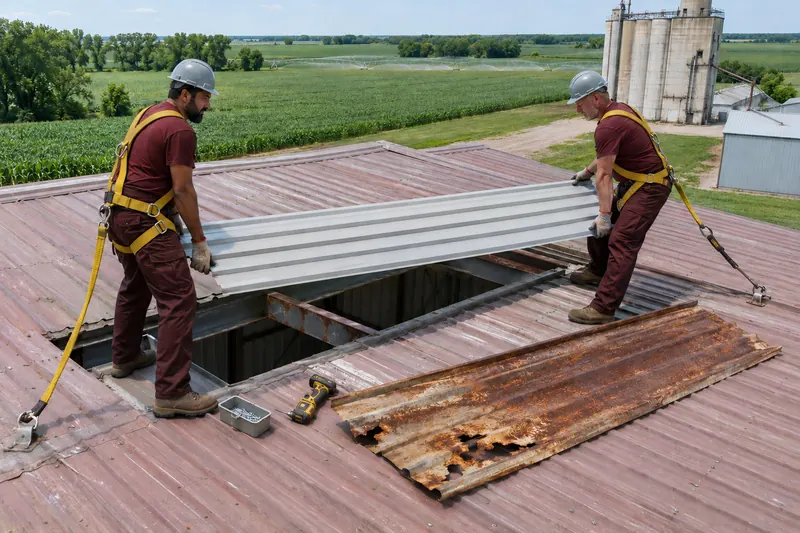
Steel shop and storage buildings on plant sites leak at fasteners and laps after years of heat cycling.
Metal roof repair in Grand Island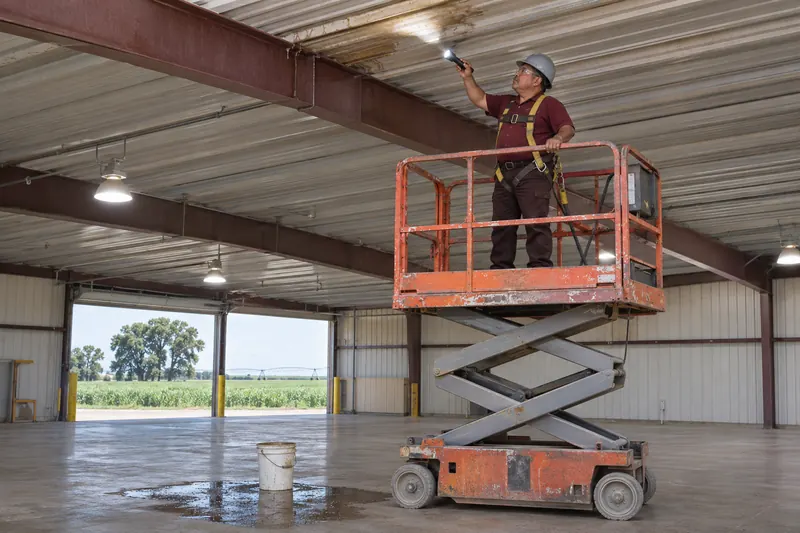
Hard-to-find leaks over tall bays get traced from the floor up before any repair is made.
Roof leak repair in Grand IslandCommon questions from plant managers and maintenance leads.
The usual membrane, seam, and drain checks, plus the areas a plant wears hardest: exhaust discharge zones, grease or chemical residue, walkway wear, equipment supports, and damage left by service visits. Edge protection and roof hatch condition are noted as well. Everything goes into a repair list ranked by urgency.
Yes. Repairs happen from the roof side while production runs below. We coordinate lockout of rooftop units, hot work permits, and clear zones with plant maintenance, and protect interior drop zones. If a permanent repair needs dry weather or parts, a temporary seal goes on during the shift.
Residue is cleaned off, degraded membrane is cut out, and the curb flashing is replaced. Grease and chemical exhaust soften many membranes, so the repair material has to resist that exposure. Grease containment boxes or guards limit buildup, and fan curbs are checked for rust, loose fasteners, and enough height above the roof.
At least twice a year, in spring and fall, and after major storms. Plants with heavy rooftop traffic or process exhaust are better served by quarterly walks. Each visit clears drains, checks seams and flashings, and logs new damage, so small repairs get made before leaks reach production.
Most skylight leaks come from the curb flashing, the frame seal, or a cracked lens. Crews reseal or replace the curb flashing, refasten loose frames, and replace yellowed or cracked lenses. Fall protection screens go on where workers walk nearby, and older plastic domes get checked after every hailstorm.
Yes. We repair plant, processing, and warehouse roofs in Grand Island and the towns around it, including Aurora, Central City, St. Paul, Ord, and Wood River. Each job starts with an industrial roof inspection and a safety plan set with your maintenance lead, then repairs from the roof side.
Share the plant's roof layout, fan count, and any active leaks, and we will plan the inspection with your maintenance lead.